
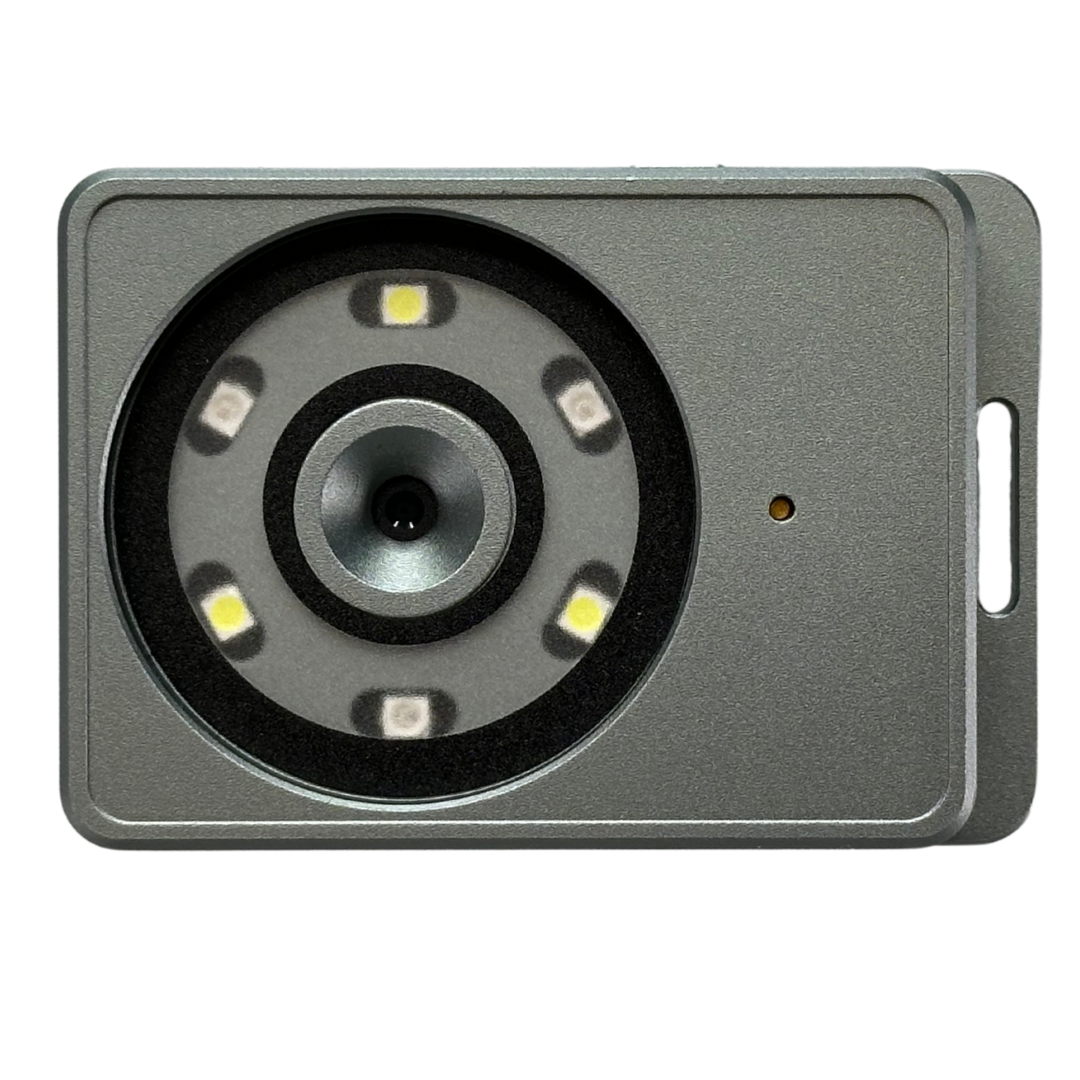
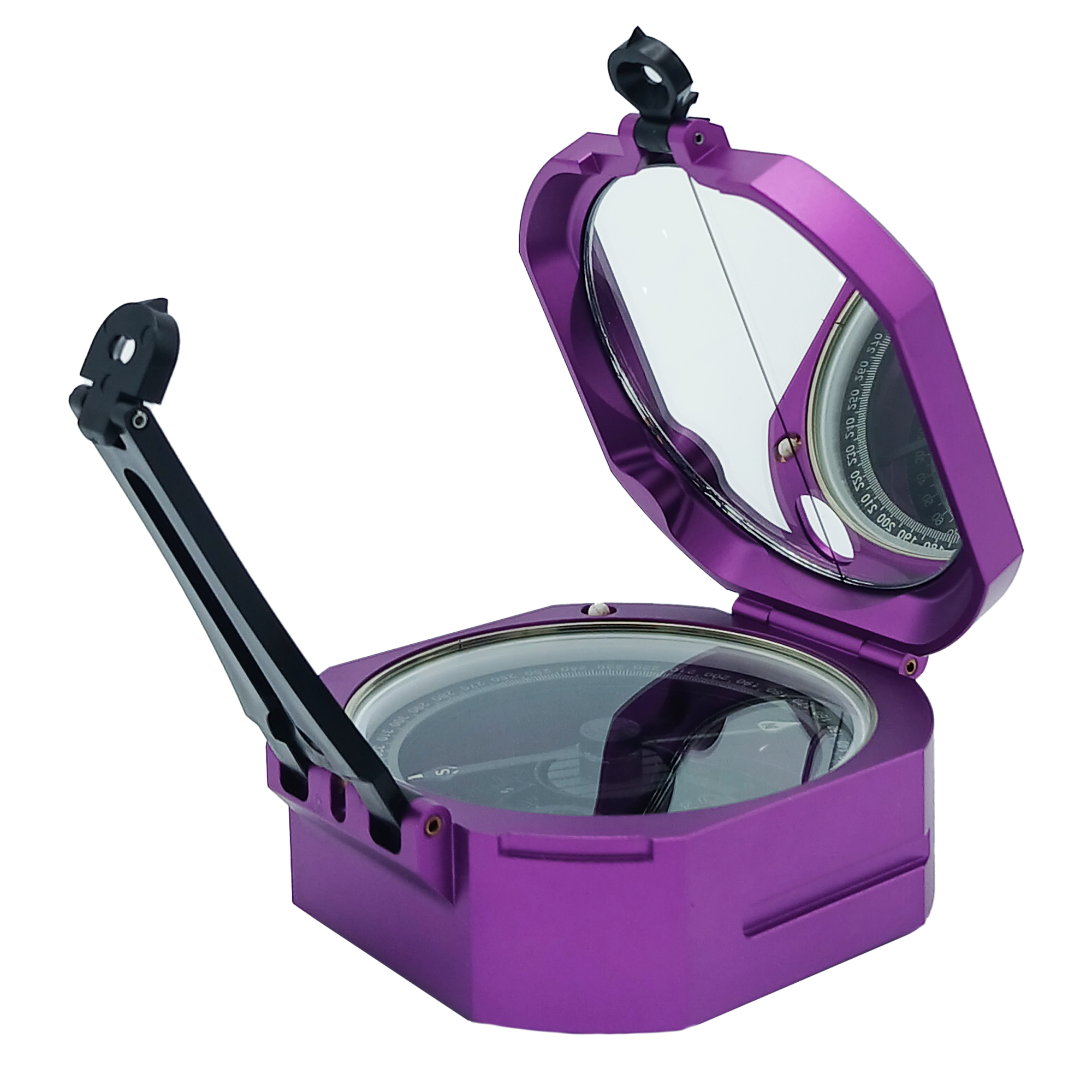
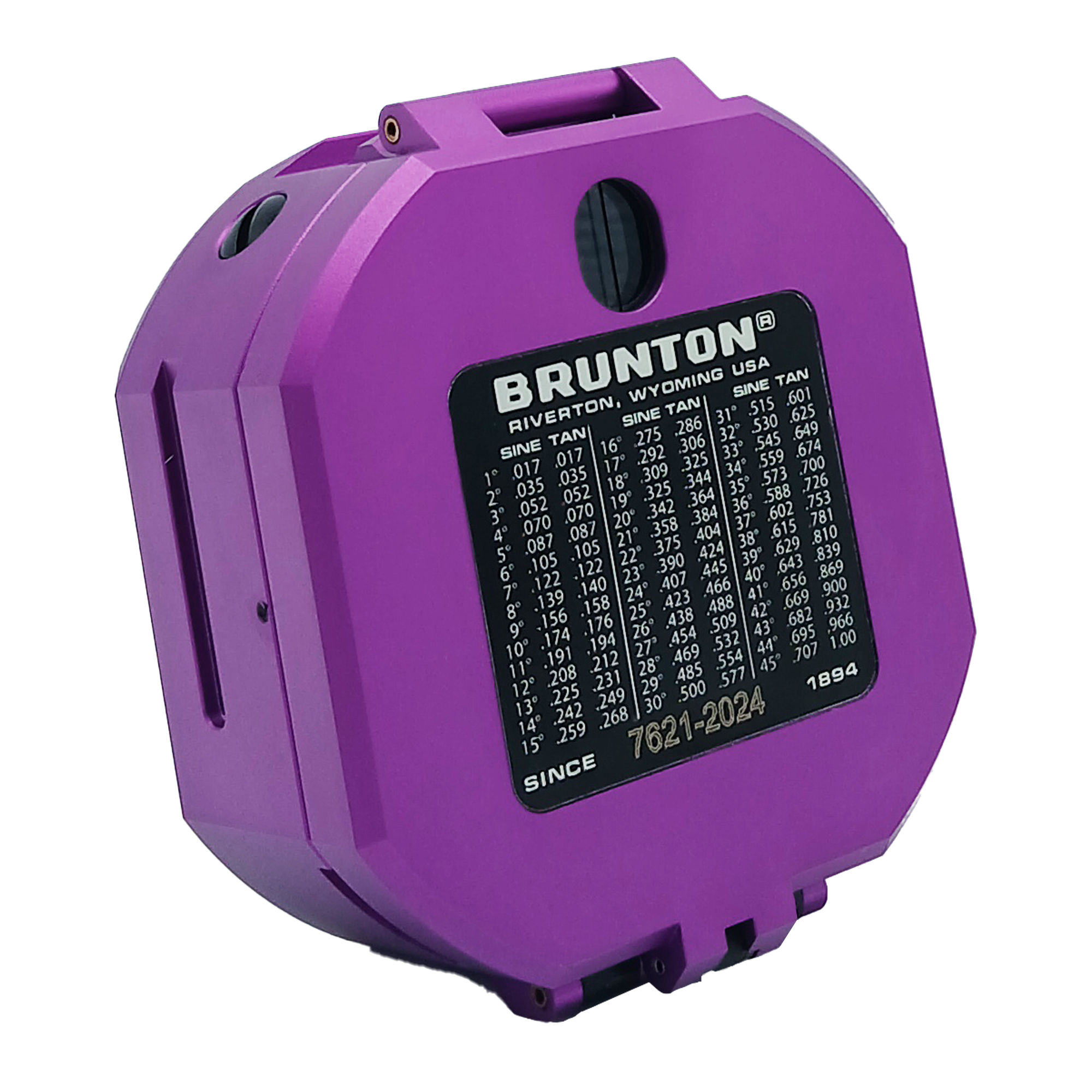

The GRS densitometer, when used with line-point transect sampling, combines
horizontal and vertical vegetation sampling thereby enabling the collection of
resource information across the landscape (horizontally) at different canopy
levels (vertically). This technique provides estimates of cover for any element
in a vegetated environment such as: trees, shrubs, herbaceous, down woody
material, fuels, snags etc. This method of sampling has been shown to be
accurate, objective, and repeatable between observers.
The cover estimates generated using the GRS densitometer are based on an
evaluation of cover data collected at sample points evenly spaced along
transects. For example, trees are determined to be "cover" trees by
sighting through the densitometer and determining whether any portion of a tree
crown intersects the vertical line of sight through the densitometer. The
vertical line of sight is obtained by levelling both of the densitometer's
bubble-levels and then sighting through the instruments so that the sighting
marks are aligned. The GRS Densitometer can be oriented to sight either up or
down, to provide canopy and/or ground sample.
Transects of several different forms and lengths may be used, depending on
the characteristics of the sample area. If the sample area is too small to
effectively place a straight-line transect within, then a diamond-shaped or
triangular shaped intersect can be used. The transect layout should avoid any
potential bias and error that may result from the systematic orientation of the
transect with respect to physiographic (terrain) features.
The point-transect sampling methodology provides estimates of the cover
contribution of the different characteristics measured at each point along the
transect. Estimated distributions of species composition, tree size, age, crown
diameter, and any other sampled characteristics are easily generated by dividing
the number of points tallied for each recorded characteristic by the total
number of sample points. For example, if 100 points are sampled along the
transect and 29 of the sample points are covered by Douglas-fir trees, then the
estimated cover of Douglas-fir is 29 percent. If 17 of the 100 sample points
indicate cover is provided by trees equal to or greater than 36" dbh then
the estimated cover of the 36" + size class is 17 percent. If 74 sample
points indicate conifer cover and 9 points indicate hardwood cover then the
total tree cover estimate is 83 percent ((74+9)/100) and the estimated percent
conifer composition is 89.2 percent (74/83).